A Quick Guide to Choosing the Right Elastomer
Selecting the right elastomer is an important step when designing or sourcing seals, profiles, and other flexible components. The material affects product lifetime, manufacturing methods, maintenance requirements, and overall costs.
EPDM, TPE, and TPU are all widely used engineering materials, but each has different strengths. This guide provides a practical overview of where each material performs best and when another option may be more suitable.
EPDM, TPE, and TPU at a glance
| Property | EPDM | TPE | TPU |
| Weather and UV resistance | Excellent | Very good | Good |
| Ozone resistance | Excellent | Good | Good |
| Abrasion resistance | Moderate | Good | Excellent |
| Flexibility | Excellent | Excellent | Good |
| Mechanical recyclability | Limited | Yes | Depends on grade |
| Typical applications | Outdoor seals, construction | Custom profiles, construction, industrial sealing | High-wear industrial components |
| Available colors | Mainly black | RAL colors | RAL colors |
| Recyclable | No | Yes | Yes |
While these materials share some characteristics, they are typically selected for different applications.
When EPDM is the right choice
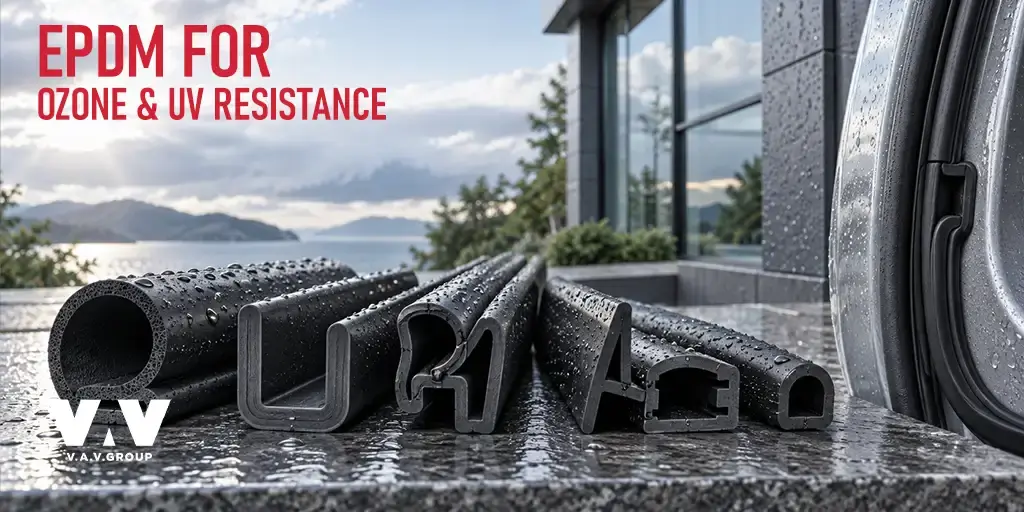
EPDM has long been one of the most common materials for sealing applications exposed to outdoor conditions. It offers excellent resistance to weathering, UV radiation, ozone, and moisture, making it well suited for long service lives in demanding environments.
Typical applications include:
- Building and façade seals
- Window and door systems
- Outdoor equipment
EPDM is often the preferred option when environmental resistance is more important than abrasion resistance.
When TPE is the right choice
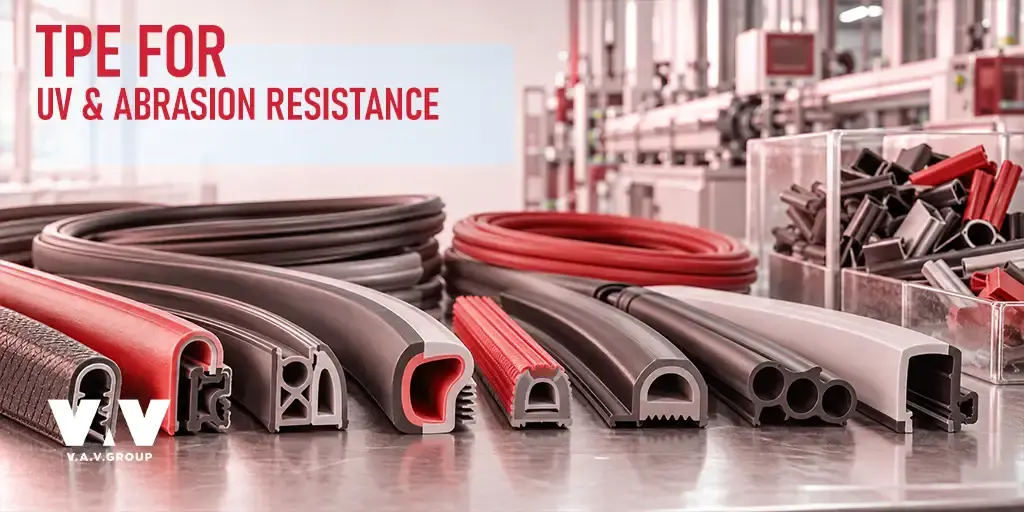
Thermoplastic elastomer (TPE) combines rubber-like flexibility with the processing advantages of thermoplastics. It is a versatile material that can be extruded into complex custom profiles and suits a wide range of industrial sealing applications. It also offers a full RAL color scheme to meet a wide range of requirements.
For many manufacturers, TPE also supports sustainability goals because production waste can be mechanically recycled and returned to the manufacturing process.
Typical applications include:
- Custom sealing profiles
- Industrial equipment
- Building and façade seals
- Window and door systems
- Public and railway transport interiors
- Electrical enclosures
- Machinery and equipment
TPE is often selected when flexibility, manufacturing efficiency, and consistent quality are important requirements.
Read more: EPDM vs TPE Differences – V.A.V. Group
When TPU is the right choice
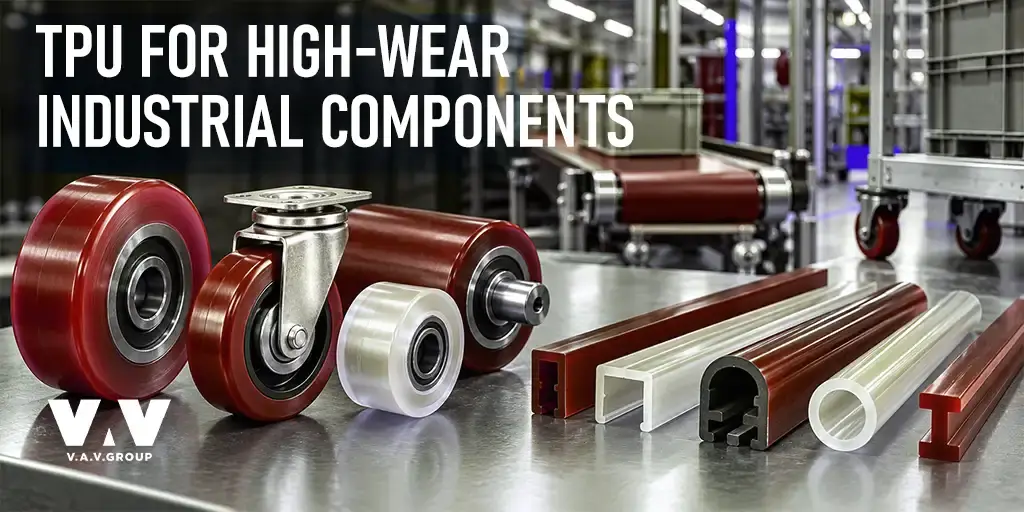
Thermoplastic polyurethane (TPU) is known for its excellent abrasion resistance and mechanical strength. It performs well in applications where components are subject to repeated wear, friction, or mechanical loading.
Typical applications include:
- Rollers and wheels
- Wear strips
- Protective components
- Industrial machinery
- Material handling equipment
Compared with EPDM and many TPE grades, TPU generally provides better wear resistance but is not usually the first choice for long-term outdoor sealing applications.
Read more: TPE vs. TPU – What’s the difference? – V.A.V. Group
Recyclability and carbon emissions
EPDM’s big downside compared to other alternatives is that it is a thermoset material, meaning that once it undergoes vulcanization (curing), it cannot be melted or reshaped. TPEs, by contrast, are thermoplastic, which means they can be melted and reprocessed multiple times without significantly degrading their performance. This makes TPE much more material-efficient.
On our website, you will find an EPDM to TPE carbon emission calculator. It will give you an estimate of how your product’s carbon emissions would change if you decided to make the switch from EPDM to TPE. In cases where the profile’s use case does not prevent it, we recommend choosing a greener alternative.
Which material should you choose?
There is rarely one material that performs best in every situation. The right choice depends on the operating environment and the priorities of the application.
As a general guideline:
- Choose EPDM for outdoor applications requiring excellent weather, UV, and ozone resistance.
- Choose TPE for versatile custom profiles, efficient manufacturing, and applications where mechanical recyclability is an advantage.
- Choose TPU for components exposed to heavy wear, abrasion, and repeated mechanical stress.
Material selection should also consider operating temperatures, chemicals, certification requirements, manufacturing methods, and expected service life.
Material is only part of the solution
The performance of a sealing solution depends on more than the material alone. Profile geometry, tolerances, installation method, and manufacturing quality all influence the final result.
At V.A.V. Group, we help customers select both the right material and the right profile design for their application. Whether the project involves construction, rail, marine, or industrial equipment, choosing the appropriate combination early in the design process can help reduce maintenance needs and improve long-term performance.
If you are unsure whether EPDM, TPE, or TPU is the best fit for your application, get in touch! We’ll be happy to discuss your requirements.