At V.A.V. Group, profile extrusion is only part of the service we provide. Through our further processing capabilities, extruded profiles can be transformed into ready-to-install components tailored to customer requirements. To support future growth and improve working conditions, the company expanded and reorganized its further processing facilities approximately a year ago.
While the new facilities have already been in full-time use for some time, the changes were not about adding entirely new operations. Instead, the focus was on creating a more efficient, scalable, and higher-quality working environment.
For this article, we asked Development Engineer Arttu Juntunen about the changes to, and the future of, further processing methods at V.A.V. Group.
Dedicated Spot for Further Processing
The project began when V.A.V. Group relocated its main operations to a different section of the production hall. The original plan was to convert part of the previous production area into storage space and create a more unified layout for further processing activities.
Previously, further processing operations were spread across different areas of the hall. Today, they have been consolidated into a dedicated area designed specifically for the work.
“We got a new space with better lighting, more practical workstations, and reserved room for future investments,” says Arttu.
The new layout also includes dedicated storage areas, allowing further processing to function as a clearly defined unit rather than being scattered throughout the facility.
Improved Working Conditions
Although no major new production equipment has been installed yet, significant improvements were made to the working environment.
“The lighting was improved significantly, ventilation was upgraded with additional extraction, and the workstations were enhanced,” Arttu explains.
The expanded area also includes additional space that is currently being used for storage. However, it was designed with future development in mind.
“It gives us the capability to make equipment investments that can replace some of the more manual stages of production, such as corner-joining machines, for automated solutions.”
In addition to lighting and ventilation improvements, the upgraded facility has strengthened chemical management practices and provided more room for both production and storage.
Preparing Customer-Specific Solutions
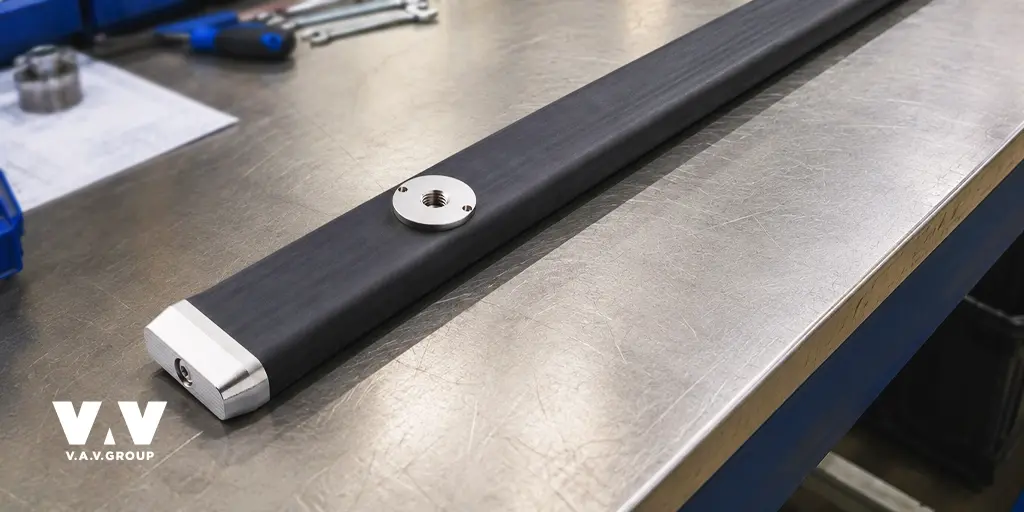
Further processing transforms standard extruded profiles into finished components that are ready for installation.
“We prepare the profile material according to the customer’s requirements, even into specific assemblies,” says Arttu. “That way, the customer doesn’t need to perform additional work on their end—the product is ready for installation.”
The department handles a wide variety of operations, including:
- Applying tapes and fastening solutions
- Manufacturing rings, frames, and joined profile assemblies
- Cutting and perforating profiles
- Quality control and testing
- Pressure testing assembled components
- Installing valves and other accessories
The goal is to deliver components that arrive ready for use, reducing assembly work for customers and helping streamline their production processes.
Built for Future Growth
According to Arttu, one of the biggest benefits of the new facility is the improved working environment for employees.
“For the people working there, it’s a much more pleasant setup because everything is now in the same area instead of being spread around the hall.”
The additional space also creates opportunities for future automation investments that can improve both efficiency and quality.
“It enables us to acquire automated equipment in the future. In that way, we can further improve quality and efficiency.”
We are already seeing growing demand for more advanced further processing services, particularly for silicone products used in demanding environments and joined assemblies for vehicle and defence industry applications.
“Perforation and joining work are services that customers are requesting more and more. We will likely add more automation to that side in the near future.”
While Arttu describes the facility as “still a bit of a work in progress,” the response from production personnel has been positive, and the expanded space provides a strong foundation for future development.
“We are satisfied with it already. And if we can implement a few of the additional improvements we have in mind, it’ll be even better.”